Physical Address
304 North Cardinal St.
Dorchester Center, MA 02124
Physical Address
304 North Cardinal St.
Dorchester Center, MA 02124
RTÉ will air Father Ted’s Eurovision episode instead of the contest final as Ireland boycotts Eurovision over Israel’s participation.
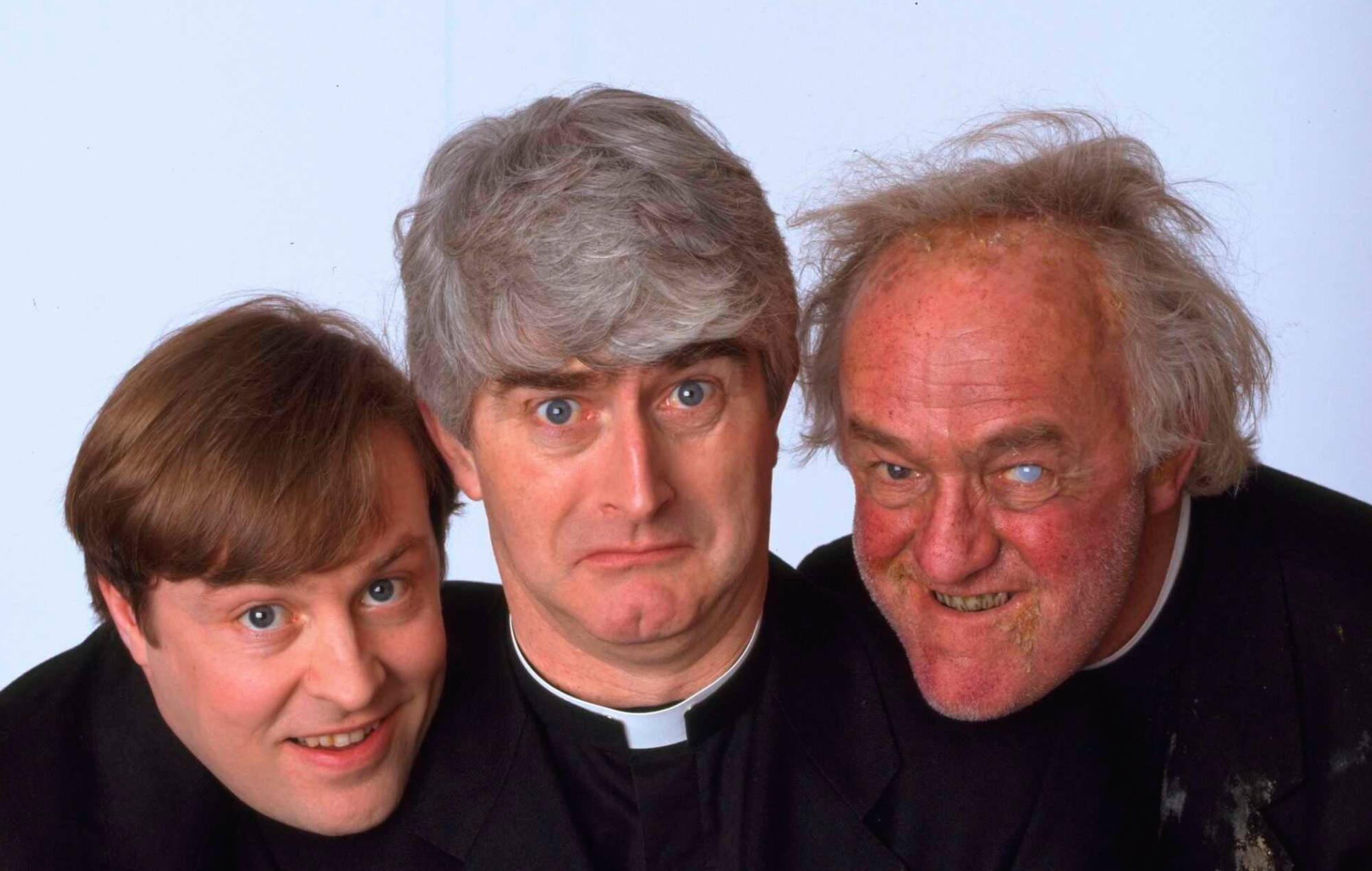
RTÉ will not show the Eurovision Song Contest final this weekend. Instead, the Irish broadcaster is set to air the Father Ted episode A Song For Europe, the installment in which Ted and Dougal perform their doomed entry, My Lovely Horse.
The 70th Eurovision final is scheduled for Saturday, May 16, in Vienna. Ireland is among the countries that have already moved to boycott the contest over Israel’s participation this year. The Netherlands, Slovenia and Spain have also announced boycotts. The Netherlands and Iceland are not sending acts to compete, though both will still air the final.
The RTÉ decision has drawn a sharp response from Father Ted co-creator Graham Linehan, who posted on X calling for the resignation of RTÉ Director General Kevin Bakhurst. He accused the broadcaster of using Father Ted “as a tool of antisemitic harassment” and said he was “disgusted” that the series was being used “as a fig leaf to cover RTE’s disgraceful antisemitism.”
Linehan has also launched a petition on the matter. In its text, he argued that RTÉ’s Eurovision boycott is “antisemitism – the oldest hatred – dressed up in the language of human rights.” He also said the broadcaster had singled out “the world’s only Jewish state for exclusion” while not applying the same standard to other countries, and cited Russia, Belarus and Azerbaijan.
He added that RTÉ was worsening the situation by filling the Eurovision slot with his show. “I did not give my permission for Father Ted to be used as a prop in an antisemitic political gesture,” he wrote. “I object to it in the strongest possible terms.”
RTÉ has not publicly responded to Linehan’s comments.
The boycott comes after a separate investigation by The New York Times published on Monday, May 11, said Israel’s government orchestrated a “well-organised campaign” to use Eurovision as a “soft power” tool. The report said the operation was state-backed and had been active during previous editions of the competition, intensifying speculation around the event’s results.
At the European Broadcasting Union general assembly last December, members did not hold a vote on Israel’s participation. The EBU said at the time that “a large majority of members agreed that there was no need for a further vote on participation and that the Eurovision Song Contest 2026 should proceed as planned, with the additional safeguards in place.”
RTÉ had already said its own participation was untenable. In a statement cited by The Guardian, the broadcaster said: “RTÉ feels that Ireland’s participation remains unconscionable given the appalling loss of lives in Gaza and the humanitarian crisis there, which continues to put the lives of so many civilians at risk.”
Pressure on Eurovision has also come from No Music For Genocide, which published an open letter on April 21 calling for a boycott of the contest unless Israel is excluded. The letter has been signed by more than 1,100 cultural workers and artists, including Brian Eno, Massive Attack, Paloma Faith, Paul Weller, Kneecap, Hot Chip, Of Monsters and Men, IDLES, Primal Scream, Sigur Rós, Young Fathers, Mogwai, Black Country New Road, Erika de Casier, Nadine Shah, Dry Cleaning, Ólafur Arnalds, David Holmes, Nemahsis, Macklemore, Roger Waters, Peter Gabriel, Vacations and Smerz, along with a number of former Eurovision finalists.