Physical Address
304 North Cardinal St.
Dorchester Center, MA 02124
Taylor Swift, Beyoncé, the Go-Go’s and Ray Charles are among 25 recordings added to the 2026 National Recording Registry.
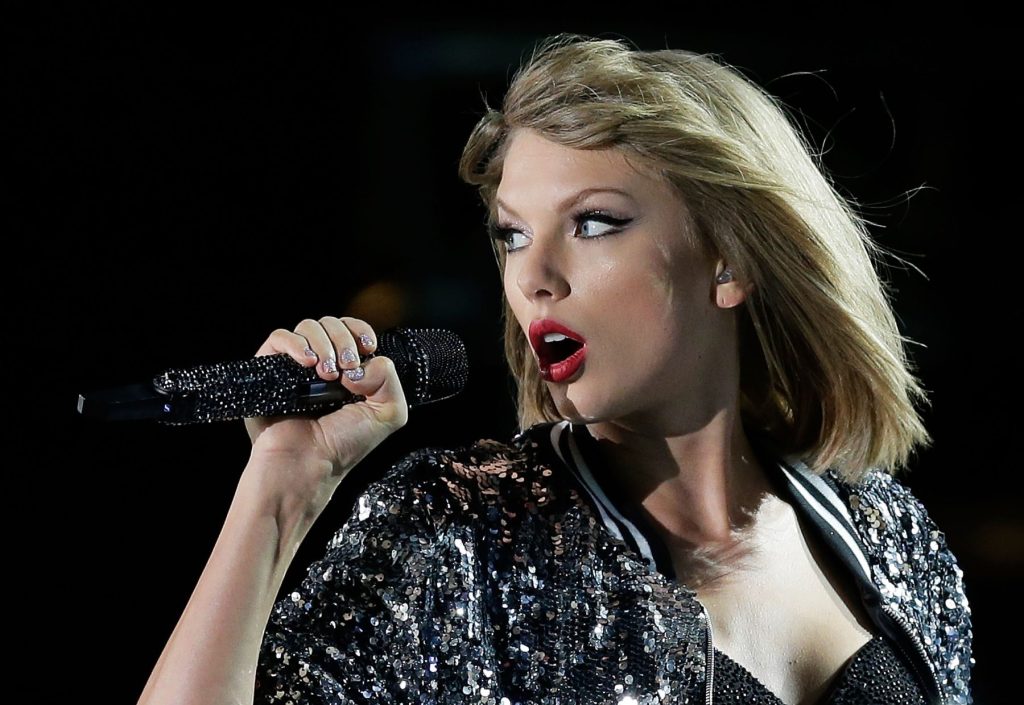
Taylor Swift’s 1989, Beyoncé’s “Single Ladies (Put a Ring On It),” José Feliciano’s “Feliz Navidad,” Chaka Khan’s version of Prince’s “I Feel for You” and the Broadway cast album to Chicago are among the 25 recordings added to the National Recording Registry this year.
The Library of Congress announced the 2026 class on Thursday, May 14. The Registry, overseen by the Library and guided by the National Recording Preservation Board, adds 25 titles each year that are at least 10 years old and considered “culturally, historically, or aesthetically significant.” The new class brings the total to 700 recordings.
This year’s list also includes three debut albums: the Go-Go’s Beauty and the Beat, Stevie Ray Vaughan and Double Trouble’s Texas Flood, and Weezer’s Weezer, often called The Blue Album. Ric Ocasek, the Cars frontman and producer, worked on Weezer’s debut. The Cars’ self-titled album was inducted two years ago.
Ray Charles joined a small group of artists with two entries in the Registry. His 1962 album Modern Sounds in Country and Western Music was selected this year. His 1959 hit “What I’d Say (Part I & II)” was one of the Registry’s inaugural selections in 2002.
Beyoncé’s “Single Ladies” was added eight years after Jay-Z’s The Blueprint entered the Registry, making the Carters one of the few married couples represented there. The song is one of three No. 1 Billboard Hot 100 singles in this year’s class, alongside the Byrds’ “Turn! Turn! Turn! (To Everything There Is a Season)” and Gladys Knight & the Pips’ “Midnight Train to Georgia.”
The 2026 group also includes three albums that reached No. 1 on the Billboard 200: Modern Sounds in Country and Western Music, Beauty and the Beat, and 1989. It includes a Grammy album of the year winner in 1989, a nominee in Modern Sounds in Country and Western Music, a Grammy song of the year winner in “Single Ladies,” and releases by three acts that were nominated for best new artist: the Byrds, the Go-Go’s, and Swift.
Rosanne Cash’s The Wheel was also honored, 23 years after voters selected her father Johnny Cash’s 1968 album Johnny Cash at Folsom Prison. The Registry says it is the first time a father and daughter have both been chosen.
Producers Tony Brown and Don Costa each have two selections in the class. Brown produced Vince Gill’s “Go Rest High on that Mountain” and co-produced Reba McEntire’s Rumor Has It. Costa produced Paul Anka’s “Put Your Head on My Shoulder” and arranged and conducted Kaye Ballard’s “In Other Words,” the first recording of “Fly Me to the Moon.”
Paul Anka’s “Put Your Head on My Shoulder” peaked at No. 2 on the Hot 100 in 1959, blocked from No. 1 by Bobby Darin’s “Mack the Knife,” which entered the Registry in 2015. Anka, now 84, received a BMI Icon Award on Tuesday, May 12, just two days before the Registry announcement.
Other selections include Spike Jones and His City Slickers’ “Cocktails for Two,” a 1944 comic version of the Duke Ellington standard; Bobby Prince’s soundtrack to the video game Doom, the third video game work to be inducted; and “Your Love,” the 1986 house classic by Jamie Principle and later remixed with Frankie Knuckles. Billboard ranked “Your Love” No. 5 on its 2025 staff list of the 100 best dance songs of all time.
The class also includes “The Fight of the Century: Ali vs. Frazier,” the broadcast of the March 8, 1971 bout at Madison Square Garden. A broadcast of the 1938 Joe Louis-Max Schmeling fight had already been inducted.
“Music and recorded sound are essential, wonderful parts of our daily lives and our national heritage,” acting Librarian of Congress Robert R. Newlen said in a statement. “The National Recording Registry works to preserve our national playlist for generations to come.”
Robbin Ahrold, chair of the National Recording Preservation Board, said the 2026 class “beautifully captures the scope of the American experience” ahead of the nation’s 250th anniversary.
More than 3,000 public nominations were submitted this year, and Weezer was among the most nominated entries. The public can submit nominations year-round on the Library’s website. Nominations for next year will be accepted until Oct. 1.
The recordings are listed below in chronological order of release. The Library of Congress descriptions are reproduced below, unedited.
Spike Jones and His City Slickers, “Cocktails for Two” (1944)
Label: Victor
Producer: Spike Jones
Best Selling Retail Records peak: No. 4
Grammys won: Pre-dates Grammys
“Cocktails for Two” was a well-established romantic standard by 1944, making it more than fair game for Spike Jones and His City Slickers to send it up with their full arsenal of cowbells, washboards, shouts, hiccups and raspberries delivered at a breakneck tempo to the languid crooning of vocalist Carl Grayson. By the time the band released the single to the public the last week of 1944, “Cocktails for Two” had been in their repertoire for nearly a year and was a staple of the band’s performance sets, including national radio broadcasts. The release was held up by the American Federation of Musicians’ strike against U.S. record labels begun in 1942. By the time the band’s record label, RCA Victor, settled in November 1944, public demand for “Cocktails for Two” guaranteed that it would be one of the numbers Jones and company would record at their first post-strike recording session and release post-haste. It became one of 1945’s biggest hits and a signature song for Jones and company.
Pérez Prado and His Orchestra, “Mambo No. 5” (1950)
Label: RCA Victor
Producer: unknown
Chart peak: didn’t chart
Grammys won: Pre-dates Grammys
Though now over 75 years old, Pérez Prado’s bouncy, lively, infectious Latin hit sounds as fresh today as it did the day it was written. The work was created in 1949 by the Cuban-born composer, pianist and bandleader, and the worldwide success of his 1950 recording earned him the title “The King of the Mambo.” Prado would remain a creative and performing force throughout the U.S. and Latin America well into the 1980s before passing away in 1989. Too good to remain unheard or undiscovered, Prado’s “Mambo” found a second life when, in 1999, Lou Bega sampled the song’s main structure (and retained its title) for his phenomenally successful international hit, “Mambo No. 5 (A Little Bit of…).”
Ruth Brown, “Teardrops From My Eyes” (1950)
Label: Atlantic
Producers: Ahmet Ertegun & Herb Abramson
Best Selling Retail Rhythm & Blues Records peak: No. 1 (11 weeks)
Grammys won: Pre-dates Grammys
The daughter of a choir director, Ruth Brown got her first taste of fame when she won Amateur Night at the famous Apollo Theater in New York when she was a teenager. In 1949, she was signed to Atlantic Records by Ahmet Ertegun and not long after, began to record a series of affecting torch songs and ballads. This 1950 release, however, was a major departure for her. Up-tempo, swinging and with a strong backbeat, Brown’s song and delivery has been heralded as a feminist turning point in American music. Brown has also since been acknowledged as a vital link in the artistic progression from Ma Rainey and Bessie Smith to the likes of Etta James and Big Mama Thornton. The success of “Teardrops from My Eyes” established her as Atlantic’s most consistent hitmaker for the next several years.
Kaye Ballard, “In Other Words (Fly Me to the Moon)” (1954)
Label: Decca
Arranger/conductor: Don Costa
Chart peak: didn’t chart
Grammys won: Pre-dates Grammys
In early 1954, 29-year-old Kaye Ballard was a seasoned performer well known to audiences at New York’s Blue Angel cabaret, but she was hardly a household name. Described by columnist Dorothy Kilgallen as “a gracefully gawky comedienne,” her resumé included a stint with Spike Jones and His City Slickers as a singer, dancer, flautist and tuba player. In 1954, she was cast in the off-Broadway musical The Golden Apple, a madcap take on the legend of Ulysses and Helen of Troy, set in the circa 1900 apple country of Washington state. Ballard played Helen as a small-town vamp, and her featured song was the sultry “Lazy Afternoon.” Apple was a hit and proved to be Ballard’s popular breakthrough. On April 2, 1954, only three weeks after the show’s premiere, she recorded “Lazy Afternoon” as a single for the Decca label. For the flipside, she chose “In Other Words,” written by Blue Angel pianist and emcee Bart Howard. Over the years, the song has been recorded by the likes of Frank Sinatra, Mabel Mercer, Peggy Lee, Johnny Mathis and Bobby Womack, and has been retitled “Fly Me to the Moon,” the opening line of the song. Throughout the rest of her long career, Ballard rarely sang anything so openly romantic, but her performance of this classic song still stands apart for the depth, warmth and wonder that she brought to it.
Paul Anka, “Put Your Head on My Shoulder” (1959)
Label: ABC-Paramount
Producer: Don Costa
Hot 100 peak: No. 2
Grammy nominations: None
The first generation of smooth and crooning male vocalists, including Frank Sinatra, Dean Martin and Tony Bennett, found one of their earliest and worthiest successors in the personage of Paul Anka. Anka was only 17 years old when he offered to the world this soon-to-be musical standard based on one of the loveliest of laments. Though the song, originally produced by Don Costa, has an undeniable doo-wop feel, it has since been embraced by pop and easy-listening audiences, leaving the song’s underlying romanti…