Physical Address
304 North Cardinal St.
Dorchester Center, MA 02124
Physical Address
304 North Cardinal St.
Dorchester Center, MA 02124
Big Loud CEO Seth England told Billboard’s On the Record podcast that Nashville is changing as coastal labels move in. He discussed songwriting shifts tied to short-form platforms, Morgan Wallen’s role in the studio, Big Loud’s multi-role structure and the evolving power of radio and playlists.
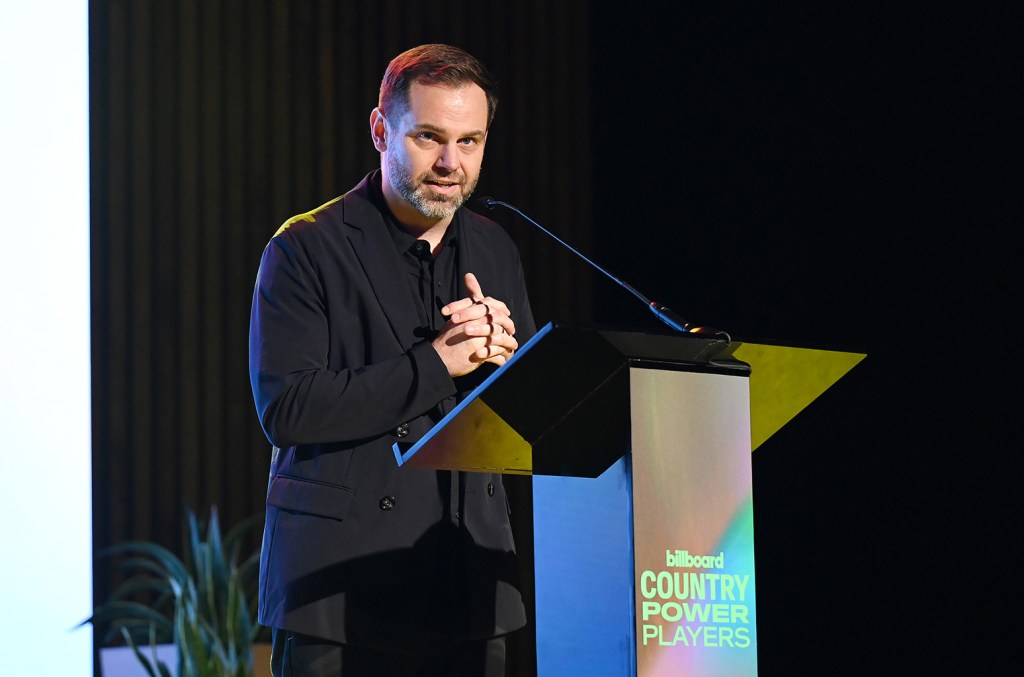
Seth England, CEO of Nashville-based Big Loud, spoke this week on Billboard’s On the Record podcast about the changing music business in Music City and the company’s approach to artists such as Morgan Wallen. England addressed label activity in Nashville, songwriting practices, radio and streaming, and the risks of combining management, label and publishing roles.
Coastal labels have recently expanded into Nashville. England cited moves this year by Capitol Music Group, Interscope Geffen A&M’s relaunch of Lost Highway and Atlantic Music Group’s new Atlantic Outpost as part of that wave.
England credited Big Loud with helping build acts including Wallen, HARDY, Ernest and Florida Georgia Line. He described the company’s early embrace of streaming and said Big Loud’s roster helped shape the current country crossover moment.
Watch or listen to the full On the Record episode below.
England said the songwriting landscape in Nashville is shifting because of short-form platforms. He framed the change as practical. “More than ever in every genre… you’re having kids record a song from their bedroom, put it online, and whatever reaction happens, happens,” he said. He estimated Morgan Wallen “writes six or seven out of every ten songs.”
On convincing artists to record outside material, England pointed to collaboration and trust. He said Wallen still participates in sessions and asks whether the team has “lost it” or remained “sharp.” “He knows there’s a difference,” England said, on the artist’s standards.
England explained the reasoning behind Wallen’s lengthy album campaigns. After the first album’s success, Wallen and the team kept booking sessions. England described holding onto dozens of demos while continuing to pursue the best material. “We feel like, in the end, we look back and go: ‘Wow, he just made something really worth clicking through the whole way.'”
On Big Loud’s combined roles, England responded to concerns about conflicts or “double dipping.” He said the company does not take duplicate fees and that his goal has been for artists to make more money in Big Loud’s structure than they would with separate partners. He also noted Big Loud has co-managed where appropriate.
About country radio and streaming, England said radio now functions as a megaphone for records that are already breaking. He argued playlists no longer break artists at the same rate. Referencing a current rock act on Big Loud, he said editorial placement accounted for only a small fraction of overall streams and that most listening came from an active audience.
England offered a listening-habits framework. He said roughly “10% of music fans are the actual ones who care… the other 90% predominantly let music come to them.” He added country has a higher share of listeners who actively seek out music and invest in artists.
On pop’s cyclical relationship with other genres, England said crossover will continue but will ebb and flow. He cited Ella Langley’s current Hot 100 success and noted that some country songs carry a pop-like hit factor underneath the genre surface.
England closed by projecting stability for country music in the near term. He identified a potential catalyst: if a major legacy artist returns their catalog to streaming platforms, that move could produce a multi-year lift for the genre. He mentioned Garth Brooks as an example of an artist who could trigger that kind of moment.