Physical Address
304 North Cardinal St.
Dorchester Center, MA 02124
Physical Address
304 North Cardinal St.
Dorchester Center, MA 02124
Cazzu sold out the Infosys Theater at MSG on May 6, blending tango, trap and a Mother’s Day dedication during her first U.S. tour stop.
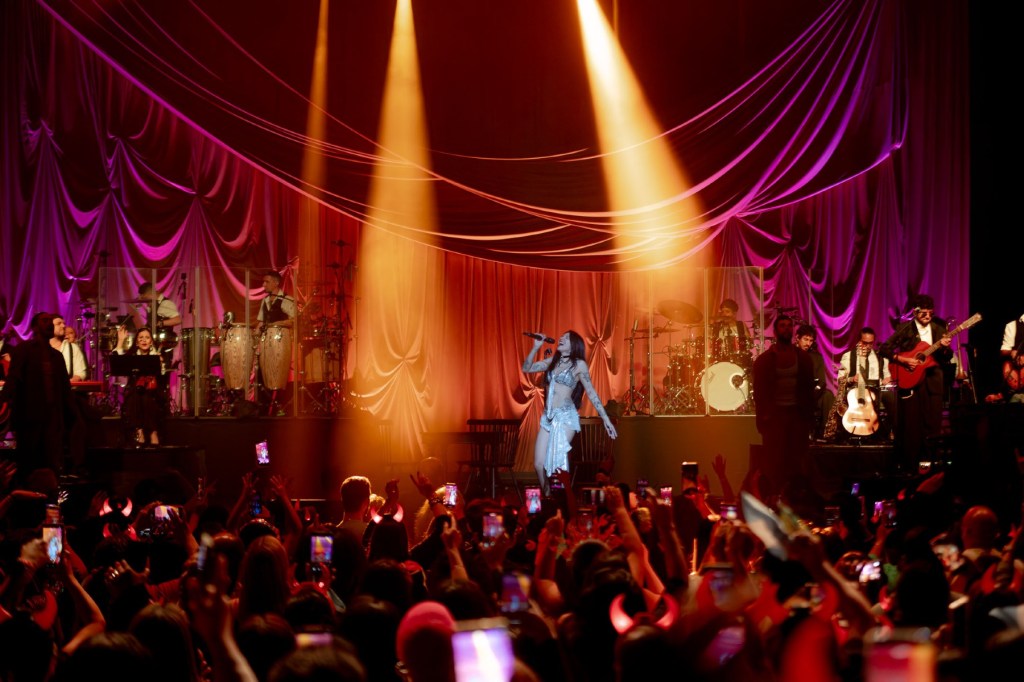
Cazzu closed the first U.S. stop of her Latinaje tour before a sold-out crowd at the Infosys Theater at Madison Square Garden on Wednesday, May 6. The Argentine singer and rapper staged a 2.5-hour production that moved from tango-bolero to trap, and from theatrical choreography to an intimate karaoke section.
She opened with the haunting Argentinian bolero “Ódiame” and held the room as dancers, a live band and theatrical sets shifted around her. Fans wearing glowing devil horns filled the darkened theater. The Latinaje album she is touring behind debuted at No. 4 on the Top Latin Pop Albums chart and at No. 48 on the Top Latin Albums list last year, marking her first entries on those Billboard rankings.
“Good evening, New York!” she told the room, visibly moved. “Wow, it feels so good to say that. When would I have ever imagined myself saying, ‘Good evening, New York’? Crazy.” She recalled singing for 30 people in a small NYC venue years earlier and promised the audience she would never forget the night.
Promoted by Live Nation, the Latin trap star will visit multiple Texas dates this month before finishing the run in Hollywood, Florida on May 21.
She began with a tango-bolero staged against visuals of an old Argentinian alleyway. Cazzu sang of betrayal and heartbreak and then moved into a tightly choreographed tango with a male dancer. Later in the set she paid tribute to Astor Piazzolla with a live ensemble that included accordion, strings and saxophone, bringing Buenos Aires textures into Madison Square Garden.
For much of the show Cazzu staged a Broadway-style production. Sets shifted. Narratives unfolded. Four men appeared in recurring roles as waiters, rivals, gangsters and lovers. The choreography alternated between slick acrobatics and tense, sensual scenes in which she moved between coquettish and commanding personas.
One sequence featured a man attempting a kiss that was rebuffed onstage. The dramatic arc tied theatrical intensity to the album’s themes of heartache and empowerment.
With Mother’s Day approaching on May 10, Cazzu dedicated a tender moment to mothers and to her own experience as a parent. She introduced the track “Inti,” named after her daughter with Christian Nodal, and discussed how motherhood has changed her approach to songwriting.
“Latinaje, and all of you — this whole beautiful family who have joined Team Cazzu — have taught me to overcome my own self-doubt, to be myself, and to write honest songs like the one coming up next, which I wrote with so much love for my little girl,” she said.
The moment also referenced Cazzu’s offstage work, including the Cazzu Law initiative in Mexico, which advocates for single mothers facing legal barriers to protecting their children’s mobility.
Midshow Cazzu shifted back to her trap roots. She reimagined material from Nena Trampa (2023) with live instrumentation, trading programmed beats for a band that recreated the textures of Argentine trap. In a minimalist outfit she delivered fiery verses on tracks such as “Jefa” and “Yo, Yo y Yo,” leaning into the vengeful bite of those songs while the live setup added a raw edge.
Near the end of the night Cazzu dimmed the spectacle and invited the crowd into an intimate karaoke segment. Dressed in a silvery outfit, she covered Selena’s cumbia “Si Una Vez” and ranchera “No Me Queda Más.” She told the audience she had curated a pre-show playlist of Latin classics ranging from New York salsa to regional Mexican hits and noted how much she loves mariachi music.
The penultimate number was her own cumbia villera hit “Con Otra,” which topped the Billboard Argentina Hot 100. The song, rumored to be aimed at Ángela Aguilar, became a communal moment: the crowd sang every lyric and continued chanting the chorus outside the venue after the show.
Cazzu’s NYC stop mixed theatricality, live musicianship and personal confession. It framed Latinaje as a stage piece as much as an album, and left the audience chanting into the night.