Physical Address
304 North Cardinal St.
Dorchester Center, MA 02124
Physical Address
304 North Cardinal St.
Dorchester Center, MA 02124
UK music figures say the government has delayed action on ticket touting by putting its resale ban into a draft bill.

The UK music industry has reacted with disappointment after the government presented its plan to tackle ticket touting as a draft bill in today’s King’s Speech, rather than moving straight to primary legislation.
The announcement comes just a week after Prime Minister Keir Starmer pledged in a letter to live music fans, first reported exclusively by NME, to “stamp out ticket touts for good” and act “as soon as possible”. But the legislation now sits under the title Draft Ticket Tout Ban Bill, a move that means it will first go through consultation and pre-legislative scrutiny before it can formally enter Parliament. In practical terms, that could mean years before any law is in place.
The government says the bill will “seek to destroy the operating model of ticket touts, improve access for genuine fans when tickets originally go on sale, and end rip-off resale prices once and for all”. The proposed measures would ban resale above face value, cap service fees, stop people reselling more tickets than they were allowed to buy, place obligations on resale platforms, and give the Competition and Markets Authority power to issue heavy fines.
That has done little to satisfy figures across the sector, many of whom say the delay risks pushing the problem further down the line. Tom Kiehl, chief executive of UK Music, said: “The Government’s failure to take long promised action on the shady ticket touts and rogue businesses who continue to rip off consumers is a betrayal of millions of music fans. Until we get action on sky-high ticket resales, we will continue to see cash siphoned overseas from the wallets of UK fans and the UK music industry in order to swell the already huge profits of ticket resale businesses.”
“I urge MPs to explore the legislative programme and identify alternative opportunities to ensure primary legislation is passed in this year’s Parliamentary session,” he added.
Ticketmaster UK managing director Sarah Slater also criticised the lack of immediate action. “No definitive legislative action to stop ticket touts profiteering is disappointing,” she said. “Ticketmaster voluntarily capped resale prices at face value back in 2018 and continues to invest in protecting fans with safer digital tickets, stronger bot detection, clearer pricing and better information in the queue.”
“As long as touts are allowed to make huge profits reselling tickets on other platforms, the problem will continue.”
Rocio Concha, director of policy and advocacy at Which?, said the King’s Speech fell short of expectations after Starmer’s promise last week. “It’s disappointing that full legislation to crack down on touts has not been included in the King’s Speech, especially since the Prime Minister committed just last week to getting this done ‘as soon as possible’,” she said.
“Relegating the legislation to a draft bill could result in a lengthy process of more consultations and reviews. All the while ruthless touts will continue to thrive and rip-off secondary ticketing sites will try to chip away at the legislation. The government must make good on its promises to fans by delivering a finalised bill in the next 12 months.”
Annabella Coldrick, chief executive of the Music Managers Forum, said the decision was hard to square with the government’s recent rhetoric. “Despite having been reassured by the Prime Minister in a letter to fans on Friday that there would be action ‘as soon as possible’, the relegation of this important issue to a ‘draft bill’ in the footnotes of the King’s Speech is hugely disappointing,” she said.
“Having campaigned on this issue for a decade, and following a Labour manifesto commitment and full public consultation by Government resulting in strong commitments to legislate last November, it’s puzzling to see the logic in kicking this back down the line.”
“Choosing the longer path via a ‘draft ticket tout ban bill’ will also adversely impact music fans, who are already losing hundreds of millions of pounds each year to price-gouging ticket touts. Further delays will cost them dearly.”
“We agree with the Prime Minister that legislation must be well-drafted and effective. But we need deeds, not words, and a clear and coherent timeline on when this manifesto promise will be fulfilled.”
FanFair Alliance campaign manager Adam Webb struck a similar note. “We fully support the Government’s commitment to ‘put fans first’ and ban ticket touting ‘as soon as possible’,” he said. “However, draft legislation offers a curiously circuitous route to deliver these long-promised reforms. Why take the long road when you could protect music fans today?”

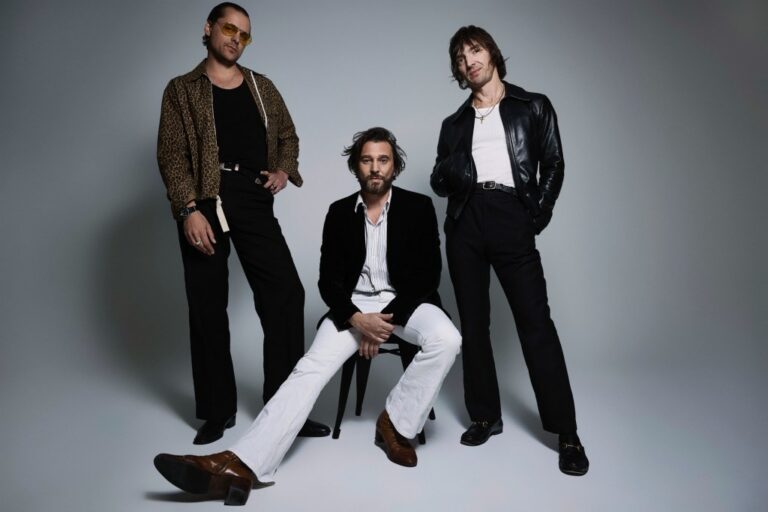
Fontaines D.C. perform at Night People in Manchester in 2018 (Photo by Visionhaus/Getty Images)
The government, for its part, insists the pause is about getting the law right. A spokesperson said: “As the Prime Minister has made clear, we remain fully committed to stamping out ticket touting for good. For too long, fans have been ripped off and we’re determined to right that wrong.
“That’s why we are taking the time to get this right by bringing forward draft legislation to ensure that our measures are truly effective, enforceable and future-proof and fans get the protection and security they have always deserved.”
Secondary ticket site Viagogo also responded, saying it understands the government’s aims but disagrees with the approach. The company said it “recognise[s] the government’s position and the need for legislation that improves ticketing for fans in the UK,” but “do[es] not believe a resale price cap will ensure fans have choice, increase competition in the UK ticketing market, or reduce ticket fraud.”
“We’re ready to work with the government on practical, pro-competitive reforms to create a better ticketing industry,” a spokesperson said. “Resale accounts for just 6 per cent of the market, while primary platforms dominate at 94 per cent. Real progress requires looking at the whole ecosystem starting with open ticketing.
“Linking primary and resale platforms would increase competition, lower prices, improve traceability, and give fans more choice in safer, more transparent environments.”
They added: “Without this joined-up approach, reform will fall short. Focusing only on price caps risks entrenching a dominant primary player, driving prices higher and leaving fans with fewer options and greater risk.”
The push to clamp down on ticket touting was first set out in Labour’s 2024 manifesto, which pledged to “put fans back at the heart of events by introducing new consumer protections on ticket resales”. In January 2025, the government said it would impose a cap on resale prices and launch an official consultation into the industry and controversial ‘dynamic pricing’ practices.
The consultation ran from January 10 until April 4. By last November, though, no concrete plan had been announced, prompting Radiohead, Sam Fender, Dua Lipa and others to call on the government to keep its pledge.
Days after that statement, the government said it would bring in a price cap on secondary ticket sales to “protect fans from rip-off prices”. Culture Secretary Lisa Nandy told NME at the time that the measures would be set out in the King’s Speech and would then have to pass through the House of Lords and Parliament before becoming law.
Concerns returned last month when music industry figures published another open letter warning against a U-turn. The signatories included management for Arctic Monkeys, Ed Sheeran, Fontaines D.C., Keane, Nick Cave and Radiohead.
NME also spoke to Starmer last August about the £1 ticket levy designed to support grassroots music venues, a scheme now being used by major live tours including Coldplay, Katy Perry, Sam Fender and Mumford & Sons. Starmer said at the time: “I’m very supportive of this initiative, the £1 levy going back into grassroots [venues], because so much of our music is grassroots.”